When Is Florida Tax-Free Weekend 2026?
Navigating the ever-changing landscape of sales tax can feel like trying to hit a moving target, especially when you're trying to save a little money on essential purchases. If you’re a parent, a student, or just someone looking to stretch your budget, figuring out when you can snag those tax-free deals in Florida is a real headache. This comprehensive guide will break down everything you need to know about Florida's sales tax holidays in 2026, so you can plan your shopping strategically and keep more cash in your pocket.
Understanding Florida's Sales Tax Holidays in 2026
Florida is one of those fantastic states that offers its residents, and even visitors, a chance to skip sales tax on certain items during specific periods throughout the year. These "tax holidays" are designed to provide financial relief for shoppers, particularly around key events like preparing for a new school year or stocking up for hurricane season. While the exact dates for 2026 are often finalized by the state legislature closer to the end of the preceding year or early in the new year, we can confidently anticipate their return based on long-standing patterns and recent legislative actions. It's truly a welcome reprieve from the standard Florida sales tax rate of 6%, not to mention any additional county surtaxes that can push the combined rate higher.
The Annual Back-to-School Sales Tax Holiday
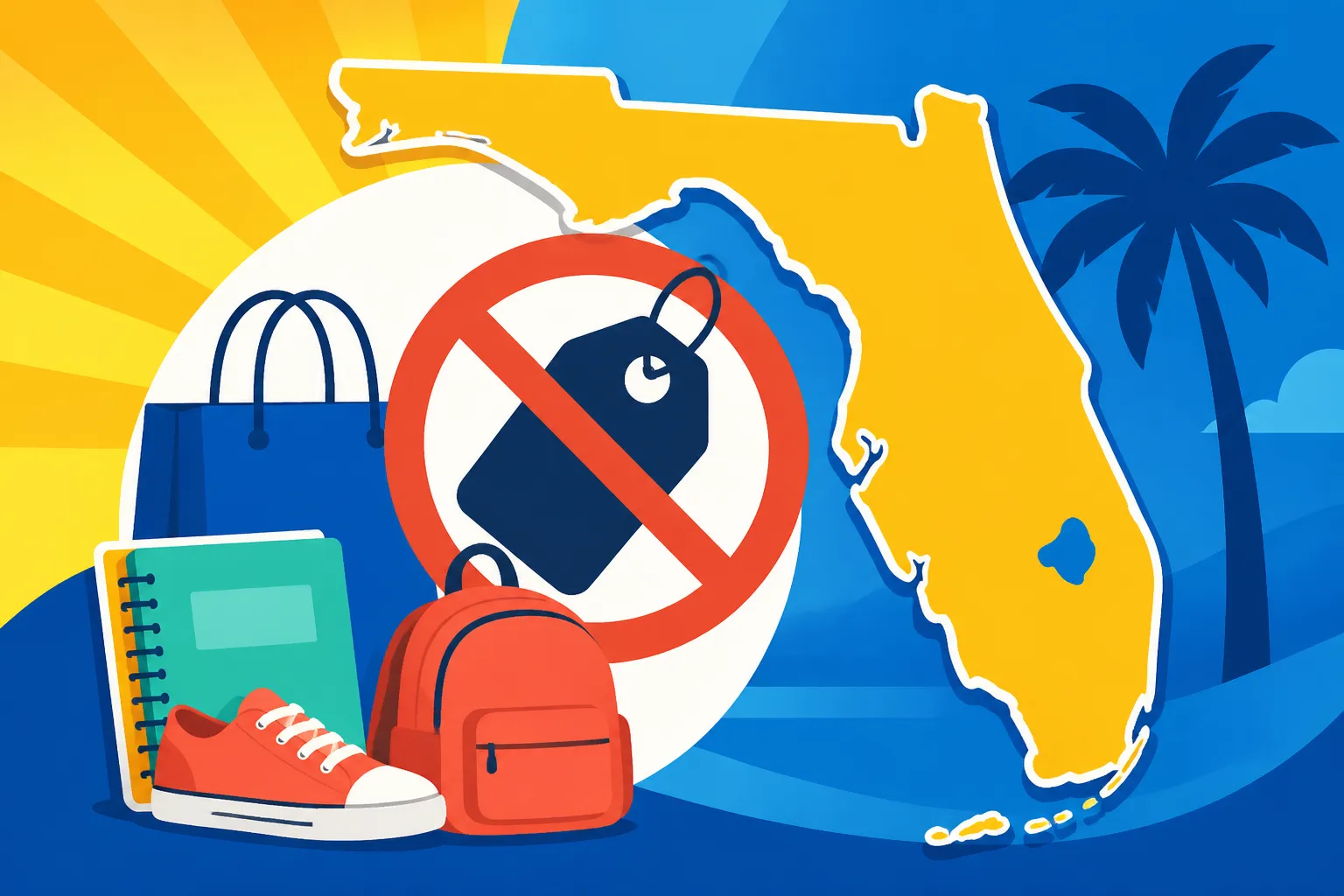
For many families, the back-to-school sales tax holiday is the most anticipated event of the year. Historically, this sales tax holiday takes place in early to mid-August, usually lasting for about 10 to 14 days, often including two full weekends. This timing is perfectly set up to help parents and students stock up on school supplies, new clothes, and even computers before classes resume. Think of it as a brief, glorious period where you don't have to factor in that extra percentage when buying everything from notebooks to new jeans. The Florida Department of Revenue will publish the official dates once they are signed into law, and it's always a good idea to check their official site for the most up-to-date information as the year progresses. These dates are typically consistent, so if you're planning your budget, pencil in early August as your prime shopping window. It’s a common misconception that all states have the same back-to-school period, but each state sets its own rules, and Florida’s is quite robust. For a broader view, you can check out the guide on Sales Tax Holidays by State 2026: Full Calendar to see how Florida compares.
Other Notable Florida Tax Holidays
While the back-to-school event often steals the spotlight, Florida actually hosts several other crucial sales tax holidays that can save you a bundle. These are not always "weekends" and can sometimes span a full week or even longer, offering extended periods of savings.
First up is often the Disaster Preparedness Sales Tax Holiday. This usually happens in late May or early June, right before hurricane season officially kicks off. This is when Floridians can purchase items like generators, batteries, flashlights, radios, tarps, and even pet supplies without paying sales tax. Given Florida's vulnerability to tropical storms, this holiday is incredibly practical and helps residents prepare for potential emergencies. It's not just about saving money; it's about incentivizing safety.
Another popular one is the Freedom Week Sales Tax Holiday, typically held in early July. This holiday focuses on recreational items, allowing shoppers to buy things like fishing supplies, camping gear, admission to sporting events, state parks, and concerts, as well as certain boating and water sports equipment, all tax-free. It’s a fantastic opportunity to embrace the outdoor lifestyle Florida is famous for, and many families plan their summer activities around this tax break.
More recently, Florida has also introduced a Tool Time Sales Tax Holiday, often taking place in September. This is a boon for tradespeople, DIY enthusiasts, and anyone looking to fix things up around the house. Eligible items usually include hand tools, power tools, safety equipment like work gloves and safety glasses, and even certain hardware supplies. This holiday helps support local trades and encourages home improvement projects without the added tax burden. Keep an eye on announcements from the Florida Department of Revenue for the specific 2026 dates for each of these invaluable tax holidays, as their exact timing and eligible items can sometimes see minor tweaks year to year.
What Qualifies for Florida's Back-to-School Tax Holiday
Alright, let's get into the nitty-gritty of what you can actually buy tax-free during Florida's back-to-school event. It's not a free-for-all on everything in the store, but the list of eligible items is quite extensive and really does cover the essentials for students. Understanding these categories and their specific price limits is key to maximizing your savings. Sometimes the rules can feel a bit arbitrary, but they're there to target genuine school-related purchases. For a more generic overview, you might find the What Qualifies for Tax-Free Weekend? article helpful, but here we'll focus on Florida's specifics.
Apparel and Footwear Exemptions
During the back-to-school sales tax holiday, most clothing, footwear, and certain accessories are exempt from sales tax, but there's a crucial price cap. Generally, individual items of clothing and shoes that sell for $60 or less are tax-free. This means you can stock up on t-shirts, shorts, jeans, dresses, socks, and sneakers for the kids (and often for adults too, as long as they fit the description of "clothing").
Imagine you're at a local department store like Macy's or JCPenney, picking out school uniforms or new outfits for your children. That $55 pair of sneakers? Tax-free. A stack of $10 graphic tees? Also tax-free. However, if you spot a designer jacket for $75, that item would not qualify for the exemption, and you'd pay the full sales tax on it. This price limit is designed to focus the benefit on everyday wear rather than luxury items. It’s also worth noting that things like briefcases, handbags, wallets, and watches are generally not considered clothing and thus remain taxable, even if they're used to carry school items. It can be confusing, which is why keeping an eye on the official list from the Florida Department of Revenue is always a smart move.
School Supplies and Learning Aids
This category is probably the most straightforward and often the biggest draw for parents. Most school supplies retailing for $15 or less per item are exempt. This covers a huge range of products that every student needs, from kindergarten through college.
Think about your usual back-to-school shopping list: pens, pencils, crayons, markers, notebooks, binders, folders, glue, rulers, and scissors. All of these typically fall under the $15 limit and become tax-free. Even items like construction paper, calculators (basic ones, not high-end graphing calculators that exceed the limit), and lunch boxes are usually included. This exemption makes a real difference when you’re buying multiple items for several children. If you've ever stood in a crowded Target or Walmart trying to check off every item on a school's supply list, you know how quickly those small costs add up. The sales tax holiday can shave a noticeable amount off the total. Keep in mind that arts and crafts supplies generally aren't covered unless they are explicitly listed as a "school supply." For example, a specialized art kit might not qualify, but a basic box of watercolors for a school art class likely would.
Personal Computers and Accessories
This is often where the biggest savings can be found, as computers and related accessories can be quite pricey. During the back-to-school tax holiday, personal computers and certain accessories with a sales price of $1,500 or less are typically exempt from sales tax. This is a huge benefit for families needing to purchase laptops, desktops, or tablets for educational purposes.
Consider a scenario where your high schooler needs a new laptop for online assignments and research. A MacBook Air or a decent Windows laptop from a retailer like Best Buy, priced at $1,200, would be completely tax-free. This can save you a significant amount, potentially over $70 in just state sales tax, not to mention county taxes. The exemption also extends to related accessories, provided they are purchased for noncommercial home or personal use with a qualifying computer. This can include things like keyboards, mice, monitors, and even non-recreational software. However, peripherals not directly essential for the computer's basic function, such as gaming consoles or printers (unless specifically deemed a qualifying accessory), generally remain taxable. For instance, a USB drive might be exempt, but a high-end gaming headset likely wouldn't be. Remember that this exemption focuses on personal computers; servers or business-grade equipment are usually excluded. It’s a great opportunity for students who need reliable tech without breaking the bank.
Items That Are Still Taxable During the Holiday
It's easy to get carried away during a sales tax holiday, thinking everything is exempt, but that's simply not the case in Florida. Many items, even those that seem school-related, still carry the full sales tax. Knowing what's not included is just as important as knowing what is, to avoid sticker shock at the checkout. The state is pretty clear about the limitations, and these typically revolve around price points or the nature of the item itself.
Beyond the Price Cap
The most common reason an item remains taxable is if its price exceeds the statutory limit set for its category. As we discussed, clothing and footwear are generally limited to $60 or less per item, school supplies to $15 or less, and personal computers to $1,500 or less. If an item costs even a penny more than these thresholds, the entire purchase price of that individual item becomes taxable.
Let's say you're shopping for a new pair of basketball shoes for your child, and they find a pair they love for $65. Even though similar shoes at $59 would be tax-free, that $65 pair is fully taxable. The same goes for school supplies; a fancy scientific calculator costing $25 would not qualify, even if a basic one for $14 would. This can be a major source of frustration for shoppers who are trying to budget precisely. It's vital to pay close attention to the price tags and be aware of these caps when you're making your selections. Many retailers will helpfully mark eligible items, but it's ultimately your responsibility to know the rules. Sales tax software like Avalara can help businesses track these nuances, but as a consumer, you need to be vigilant.
Non-Eligible School & Office Supplies
Not everything you might use for school or in an office setting qualifies as an exempt school supply. The Florida Department of Revenue has a specific list, and items not on it are taxable. This often includes things that are considered more for general office use or luxury rather than essential learning.
For example, paper products that aren't specifically notebooks or loose-leaf paper, such as printer paper or construction paper that exceeds the $15 limit, may not be exempt. Art supplies beyond basic crayons or markers, like paint sets, clay, or intricate craft kits, usually remain taxable. Even items like staplers, staples, paper clips, correction fluid, and tape are often on the taxable list because they're not deemed "essential school supplies" by the state. While they might be incredibly useful for a student, they fall outside the strict definitions. It's a fine line, and sometimes frustrating when you're trying to get everything done in one go. You might think, "Why isn't a desk stapler tax-free if it's for homework?" But the state draws a line.
Jewelry, Handbags, and Other Accessories
Many personal accessories, even those sometimes used by students, are explicitly excluded from the sales tax holiday. This category includes items like watches, jewelry, handbags, briefcases, wallets, and luggage. These are generally seen as personal adornments or luxury items rather than essential clothing or school supplies.
So, if your student wants a new backpack, that might be exempt if it meets the clothing/accessory price limit (and is classified as such), but a fashionable handbag, even if intended to carry books, would not be. The distinction can feel a bit arbitrary – a backpack holds books, a handbag holds books, but one gets the tax break and the other doesn't. This is why understanding the specific definitions provided by the state is crucial. Also, sporting goods or equipment that isn't specifically for general recreation (covered by Freedom Week) or part of the school supply list for required physical education classes would remain taxable. For instance, a new baseball glove for extracurricular sports won't get a tax break during the back-to-school holiday.
Here’s a quick summary table of common eligible and non-eligible items during Florida’s Back-to-School Sales Tax Holiday (based on historical rules, always check official DOR for 2026 specifics):
| Category | Eligible Items (Examples) | Price Limit | Non-Eligible Items (Examples) |
|---|---|---|---|
| Clothing & Footwear | Jeans, shirts, dresses, shorts, socks, shoes | $60 or less | Watches, jewelry, handbags, briefcases, luggage |
| School Supplies | Pens, pencils, crayons, markers, notebooks, binders, folders, glue, rulers, scissors, calculators (basic) | $15 or less | Staplers, paper clips, correction fluid, tape, art supplies (non-basic) |
| Computers & Accessories | Laptops, desktops, tablets, e-readers, keyboards, mice, monitors, non-recreational software | $1,500 or less | Gaming consoles, printers (unless qualifying accessory), cell phones, service warranties |
Tips for Making the Most of Florida's Tax-Free Period
Making the most of Florida's sales tax holidays isn't just about knowing the dates and eligible items; it's about smart shopping strategies. These periods can be hectic, with crowded stores and quickly diminishing stock. A little planning can go a long way in ensuring you get what you need without the added stress or the disappointment of missing out on savings. Being prepared can turn a potentially frustrating experience into a truly beneficial one.
Online Shopping Considerations
One of the biggest questions people have about tax holidays is whether they apply to online purchases. The good news is, yes, Florida's sales tax holidays generally apply to eligible items purchased online as well! This is a massive relief for those who prefer to avoid the crowds, or simply don't have the time to physically visit stores. You can shop from the comfort of your home and still enjoy the tax savings.
However, there are a few things to keep in mind. First, the item must be both eligible and sold for the qualifying price. Second, the purchase must be made during the official holiday period. This means the order must be placed, and payment processed, within the specified dates. Sometimes, if an item ships from an out-of-state warehouse, sales tax complications can arise, but most major retailers (like Amazon, Walmart, Target) that collect Florida sales tax are usually equipped to apply the exemption automatically during these periods. Just double-check your cart before checkout to ensure the tax has been removed. It’s also wise to complete your online shopping early in the holiday period, especially for popular items, as inventory can sell out quickly. Remember that delivery charges might still be taxable, even if the item itself is not, depending on how they are stated separately on your invoice. If you're curious about how online sales tax typically works, a good read is Does Online Shopping Have Sales Tax?.
Combining Discounts and Savings
The magic of a sales tax holiday isn't just the tax exemption; it's the potential to combine those savings with existing store promotions. Many retailers will offer "back-to-school" sales and discounts that perfectly coincide with the tax holiday. This creates a fantastic opportunity for double-dipping on savings.
Imagine a scenario: you find a pair of school uniform pants that usually sell for $25, but they are currently on sale for $20. Since $20 is well under the $60 clothing limit, you not only get the sale price but also pay no sales tax on that $20. This combination can lead to substantial savings, especially when you're buying multiple items. Always keep an eye out for coupons, loyalty program discounts, and clearance items. You might even find that a slightly more expensive item, when combined with a steep discount, falls below the tax-free threshold. For example, a $70 backpack discounted to $50 would now be exempt, whereas at full price, it would have been taxable. Don't be shy about asking store associates if they have any additional promotions running. Every little bit of saving helps when you're preparing for a new school year or stocking up on essential goods.
Keeping Track of Purchases for Businesses
While sales tax holidays are a boon for individual consumers, businesses that sell eligible items during these periods have a unique set of compliance considerations. Retailers are responsible for correctly identifying and exempting eligible sales, which can add complexity to their point-of-sale systems and accounting processes.
For businesses, ensuring their systems are properly configured to apply the correct exemptions to eligible items and within the specified price limits is paramount. Misclassifying an item or failing to apply an exemption can lead to customer frustration and potential compliance issues. This is where robust sales tax compliance software solutions become invaluable. Companies like Avalara specialize in helping businesses automatically calculate and apply sales tax (or exemptions) in real-time, greatly simplifying the process during tax holidays. They can handle the intricate rules and thresholds, making sure that a retailer accurately collects and remits sales tax on taxable items, while correctly exempting the others. This is particularly important for businesses that operate across multiple states, each with its own specific tax holiday rules, such as those discussed in Sales Tax Rates by State 2026: All 50 States. Proper setup ensures both customer satisfaction and regulatory adherence, avoiding potential audits and penalties down the line.
Disclaimer
Please remember that sales tax laws and regulations, including those concerning tax holidays, can change. The information provided here is for general guidance and informational purposes only, and does not constitute professional tax advice. Always consult the official Florida Department of Revenue website or a qualified tax professional for the most accurate and up-to-date information regarding Florida's sales tax holidays, including specific dates, eligible items, and price limits for 2026.