Is a Sales Tax Permit the Same as a Business License?
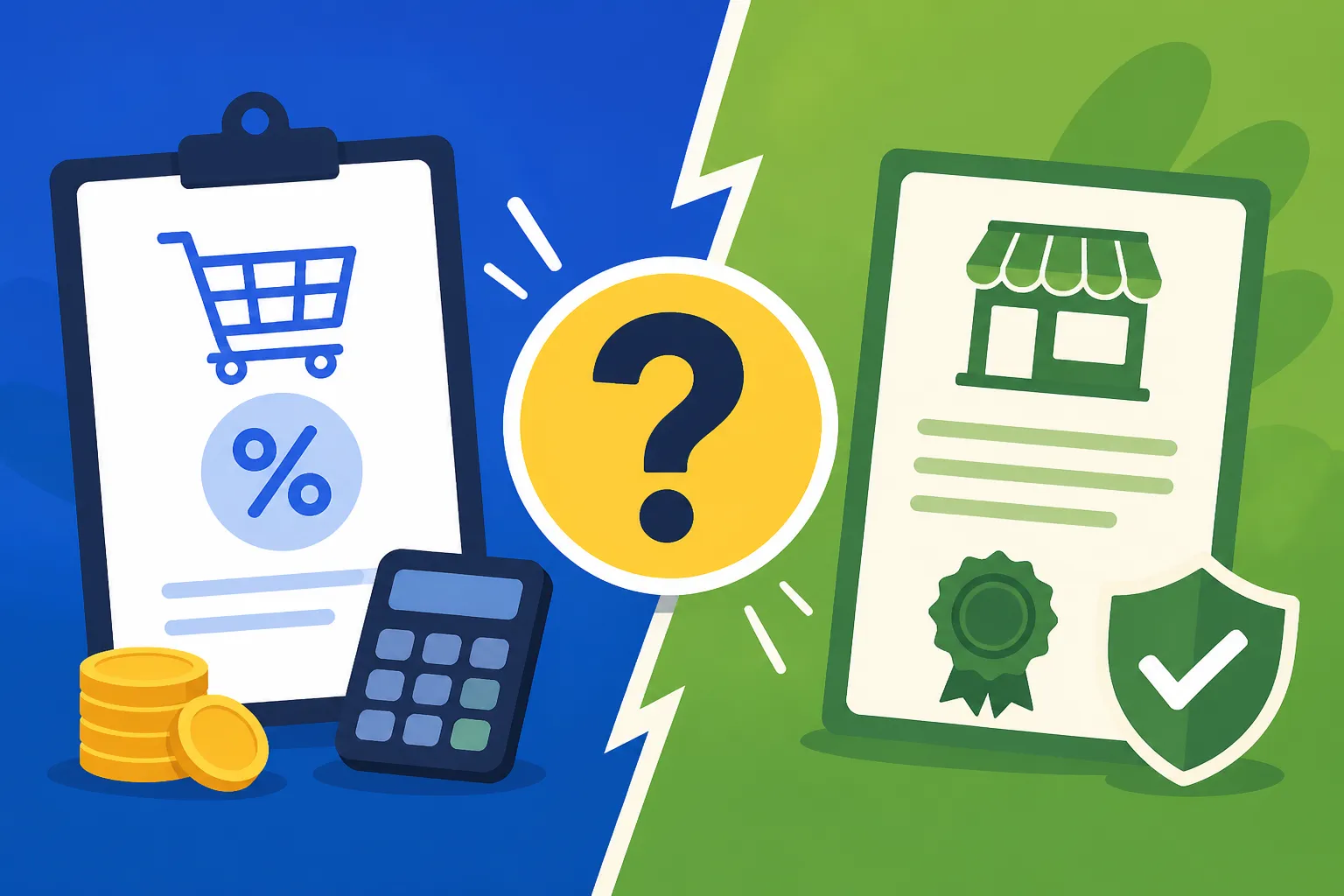
Oh, the age-old question that trips up so many new business owners, and even some seasoned ones! "Is a sales tax permit the same as a business license?" It's a question loaded with potential headaches, fines, and sleepless nights if you get it wrong. The simple answer is no, they are absolutely not the same thing, but the confusion is totally understandable because sometimes their application processes feel intertwined, and their names sound so similar. This comprehensive guide will untangle the difference, explain why it matters, and help you understand when and where you need each one.
Understanding the Basic Distinction Between Permits and Licenses
Let's break down these two crucial pieces of paperwork that often get lumped together. While both are necessary for legal operation, they serve very different masters and functions.
What Exactly is a Business License?
Think of a business license as your official permission slip from a local government to simply operate a business within their jurisdiction. It's like saying, "Hey, City of Springfield, I'm setting up shop here, and I promise to abide by your local rules and regulations." This license isn't typically concerned with how much you sell or if you collect sales tax, but rather with the general act of doing business itself.
These licenses are usually issued at the city or county level, though some states might have overarching statewide business registration requirements. For example, if you're planning to open a boutique in downtown Boise, Idaho, you'd likely need a business license from the City of Boise. If your business activity falls into a specialized category, like a restaurant selling food or a salon offering services, you might need additional specific licenses related to health, safety, or professional standards on top of your general business license. The fees can vary wildly, from a small flat annual fee to amounts based on your projected revenue or number of employees. It's really the local government's way of knowing who's operating within their borders and ensuring some level of accountability and adherence to local ordinances.
What Exactly is a Sales Tax Permit?
Now, a sales tax permit (which goes by many names like seller's permit, reseller's permit, certificate of authority, or sales and use tax permit) is a completely different beast. This document is your official permission from the state government to collect sales tax from your customers on behalf of the state. It essentially deputizes you as a tax collector for the state. You don't get to keep that money; you're just holding onto it until you remit it to the state's tax authority, usually monthly, quarterly, or annually, depending on your sales volume.
You need a sales tax permit if you have "nexus" in a state and sell taxable goods or services to customers within that state. "Nexus" is just a fancy word for a sufficient connection that obligates you to collect sales tax. This connection can be physical (like having an office, warehouse, or even an employee in the state) or economic (meaning you've reached a certain sales revenue or transaction threshold there, even if you don't have a physical presence). Unlike a general business license, which is about operating, a sales tax permit is specifically about collecting and remitting taxes on sales. Each state has its own specific requirements for obtaining one, and you can explore guides like our article on how to get a sales tax permit by state to see the nuances.
Why the Confusion Exists and Why It Matters
It's easy to see why these two can get mixed up. Both are essential government-issued documents for doing business, and both can involve forms and registrations. But mistaking one for the other can lead to serious legal and financial repercussions.
Overlapping Application Processes and Terminology
The primary source of confusion often stems from how states and localities handle business registrations. Sometimes, particularly for smaller businesses, the initial registration process for a general business license or state tax ID might include a section for sales tax registration. Or, a state might require you to register with their Secretary of State first, and that registration might then lead to prompts for various other permits, including sales tax. This can create a false impression that you're getting one "master" permission slip when, in reality, you're initiating several distinct processes.
Take California, for example. When you apply for a seller's permit with the California Department of Tax and Fee Administration (CDTFA), it's specifically for sales tax. But if you're operating a business in Los Angeles, you'll also need a business tax registration certificate from the City of Los Angeles Office of Finance. The state and city processes are separate, even though both are critical to your operation. Different states also use different terminology, adding to the puzzle. Some call it a "seller's permit," others a "certificate of registration," or a "vendor's license." It's no wonder entrepreneurs feel like they're navigating a linguistic and bureaucratic maze! Our guide on the Seller's Permit Explained: What It Is & How to Get One further clarifies what this specific term means.
The Critical Implications of Misunderstanding
Ignoring or misunderstanding the distinction between these two can lead to significant problems. If you operate without the proper local business license, you could face fines, penalties, or even be forced to cease operations by local authorities. Imagine setting up your dream coffee shop, only to have the city shut you down because you skipped the local licensing step!
On the sales tax side, the consequences can be even more severe. If you're selling taxable goods or services and you have nexus in a state but don't collect sales tax because you thought your business license covered it, you're on the hook for those uncollected taxes yourself. State tax authorities don't care that you didn't know; they expect you to be compliant. This can lead to hefty penalties, interest charges, and a stressful audit process. Furthermore, if you do collect sales tax but don't remit it because you don't have a permit or don't know how to file, that's essentially theft of state funds and can lead to criminal charges. It's absolutely crucial to understand your obligations for both, especially as an online seller who might accidentally trigger sales tax nexus in multiple states.
When You Need Both and How to Figure It Out
So, how do you determine what you need and how to get it? It might seem overwhelming, but by breaking it down, it becomes much more manageable.
Identifying Your Specific Business Needs
The first step is to clearly define your business operations:
- Where are you physically located? This will dictate your local business license needs (city, county). Even if you work from home, many municipalities require a home occupation permit or business license.
- Are you selling goods or services? Most tangible goods are taxable, but services vary greatly by state. Some states like Texas tax many services, while others like Florida tax very few. Knowing if your offerings are taxable is fundamental.
- Are you selling online, in person, or both? Online sellers, particularly those who ship across state lines, need to be acutely aware of economic nexus laws. You might need to register for a sales tax permit in a state where you don't have a physical presence if your sales exceed their economic nexus threshold. Our guide on Economic Nexus by State 2026: Thresholds Guide is a must-read for any online business owner.
- What is your projected sales volume? This can influence your filing frequency for sales tax and sometimes even the type or cost of local business licenses.
For example, a small craft seller in Seattle, Washington, selling handmade jewelry at local markets will likely need a City of Seattle business license and a Washington State sales tax registration. If that same seller starts shipping jewelry to customers in other states and their sales hit the economic nexus threshold in, say, Texas, they would then also need to register for a sales tax permit in Texas, even without a physical presence there. The complexities multiply quickly, which is why understanding the specific requirements for your business model and location is paramount.
Step-by-Step Guidance for Registration
Once you've assessed your needs, here's a general roadmap:
-
Start with Local Business Licenses:
- Contact your city and county clerk's offices. Many have online portals where you can search for required licenses based on your business type and location.
- Check for specific licenses if your industry is regulated (e.g., food service, construction, childcare).
- Complete the applications and pay any associated fees.
-
Move to State-Level Sales Tax Registration:
- Determine where you have sales tax nexus. This isn't always obvious, especially for online sellers. You might have nexus due to physical presence (office, warehouse, employee) or economic nexus (meeting sales thresholds). The article on Sales Tax Nexus Explained Physical vs Economic delves deeper into this.
- Visit the website of the relevant state's department of revenue or treasury. Search for "sales tax registration" or "seller's permit."
- Fill out the application. You'll typically need your Federal Employer Identification Number (EIN) or Social Security Number (if a sole proprietor), business legal name, address, and type of business.
- There is typically no fee to obtain a sales tax permit itself, though some states might have general business registration fees.
- Once approved, you'll receive your sales tax permit number and information on your assigned filing frequency and due dates.
This process can feel like a lot, especially if you're registering for sales tax in multiple states. Tools from companies like Avalara or TaxJar can significantly simplify the process of registering for sales tax permits and managing ongoing compliance across various jurisdictions, as they automate many of these steps and help you keep track of ever-changing rules.
Key Differences at a Glance
To make it even clearer, let's put the key distinctions side-by-side in a table.
| Feature | Sales Tax Permit (Seller's Permit, Certificate of Authority) | Business License (General Business License, Occupational License) |
|---|---|---|
| Purpose | Allows you to collect sales tax on behalf of the state. | Gives you permission to operate a business within a specific jurisdiction. |
| Issuing Authority | State Department of Revenue/Treasury/Taxation | City or County government (sometimes state for specific industries/professions) |
| Focus | Collection and remittance of sales tax on taxable sales. | General legality of business operations, adherence to local ordinances. |
| When Needed | When you have sales tax nexus (physical or economic) in a state and sell taxable goods/services. | When you physically operate a business within a city/county, regardless of sales tax. |
| Fees | Generally no direct fee for the permit itself (though state business registration might have fees). | Varies widely by locality; often an annual fee, sometimes based on revenue. |
| Renewal | Varies by state; some are perpetual, others require periodic renewal. | Often requires annual or biennial renewal. |
| Number of Permits | One per state where you have nexus and sell taxable goods/services. | Typically one per city/county where you have a physical presence. |
Navigating the Complexities of Multi-State Operations
For businesses, particularly online retailers, the lines between needing a business license and sales tax permits become even more intricate when you cross state borders. The internet has made it incredibly easy to sell nationwide, but it has also magnified the compliance challenges.
Economic Nexus and Remote Sellers
Before 2018's South Dakota v. Wayfair Supreme Court decision, sales tax obligations were largely tied to physical presence. If you didn't have a physical location in a state, you generally didn't have to collect their sales tax. Wayfair changed all that, introducing the concept of "economic nexus." Now, even if your business is based in Florida and only sells online, you could be required to register for a sales tax permit in, say, New York or California, simply because your sales into those states exceed certain thresholds (e.g., $100,000 in sales or 200 separate transactions annually).
This means a business could have a single local business license in their home city but be required to obtain sales tax permits in dozens of other states based solely on their remote sales activity. Each state's economic nexus threshold and rules are slightly different, making it a dizzying task to track manually. This is where automated solutions become invaluable. For remote sellers, understanding your economic nexus footprint is even more critical than ever. Remember, even if a marketplace facilitator like Amazon or Etsy is collecting sales tax on your behalf, you may still need to register for a sales tax permit in those states and file periodic returns, often "zero returns," to report sales.
Centralized vs. Decentralized Tax Administration
Another layer of complexity comes from the varying structures of state sales tax administration. Most states have a centralized sales tax system, meaning you register with the state, and they handle the collection and distribution of local sales taxes (city, county, district) for you. You file one return to the state, and that's it. For instance, if you get a Sales Tax Permit in Texas, the state collects the base 6.25% state sales tax plus any local sales taxes (up to an additional 2%) and remits them to the local jurisdictions. You only deal with the state comptroller.
However, some states, like Colorado and Alabama, have highly decentralized or "home-rule" systems. In these states, certain cities and counties have the authority to administer and collect their own sales taxes independently of the state. This means that in addition to a state sales tax permit, you might need to register directly with specific cities or counties and file separate returns to them. For example, if you sell goods in Denver, Colorado, you might need to register with both the Colorado Department of Revenue and the City of Denver for sales tax purposes. This adds significant administrative burden and further blurs the lines for business owners who might initially assume one registration covers all. For these complex states, understanding Sales Tax by ZIP Code (and Why ZIP Isn't Enough) is vital, as simple ZIP code lookups might not give you the full picture of the exact local jurisdictions involved.
It's clear that while a business license and a sales tax permit are both non-negotiable for lawful operation, they are distinct in their purpose, issuing authority, and compliance requirements. Understanding these differences from the outset will save you a lot of grief and ensure your business stays on the right side of the law. For many businesses, especially those with multi-state operations, leveraging Best Sales Tax Compliance Software 2027 can transform this daunting task into a manageable one.
Disclaimer
The information provided in this article is for general informational purposes only and does not constitute legal, financial, or tax advice. Sales tax laws are complex and constantly changing. Always consult with a qualified tax professional or legal advisor for advice tailored to your specific business situation.