What Is a Certificate of Authority (New York)?
Navigating the world of sales tax can feel like deciphering a secret code, especially for businesses trying to operate legally in a bustling state like New York. Many entrepreneurs, particularly those just starting out or expanding into the Empire State, find themselves utterly bewildered by the initial steps, often wondering if they’ve missed some crucial piece of paperwork. This comprehensive guide is here to demystify one of the most fundamental requirements for sellers in New York: the Certificate of Authority, explaining exactly what it is, why you need it, and how to get it.
What Exactly is a New York Certificate of Authority?
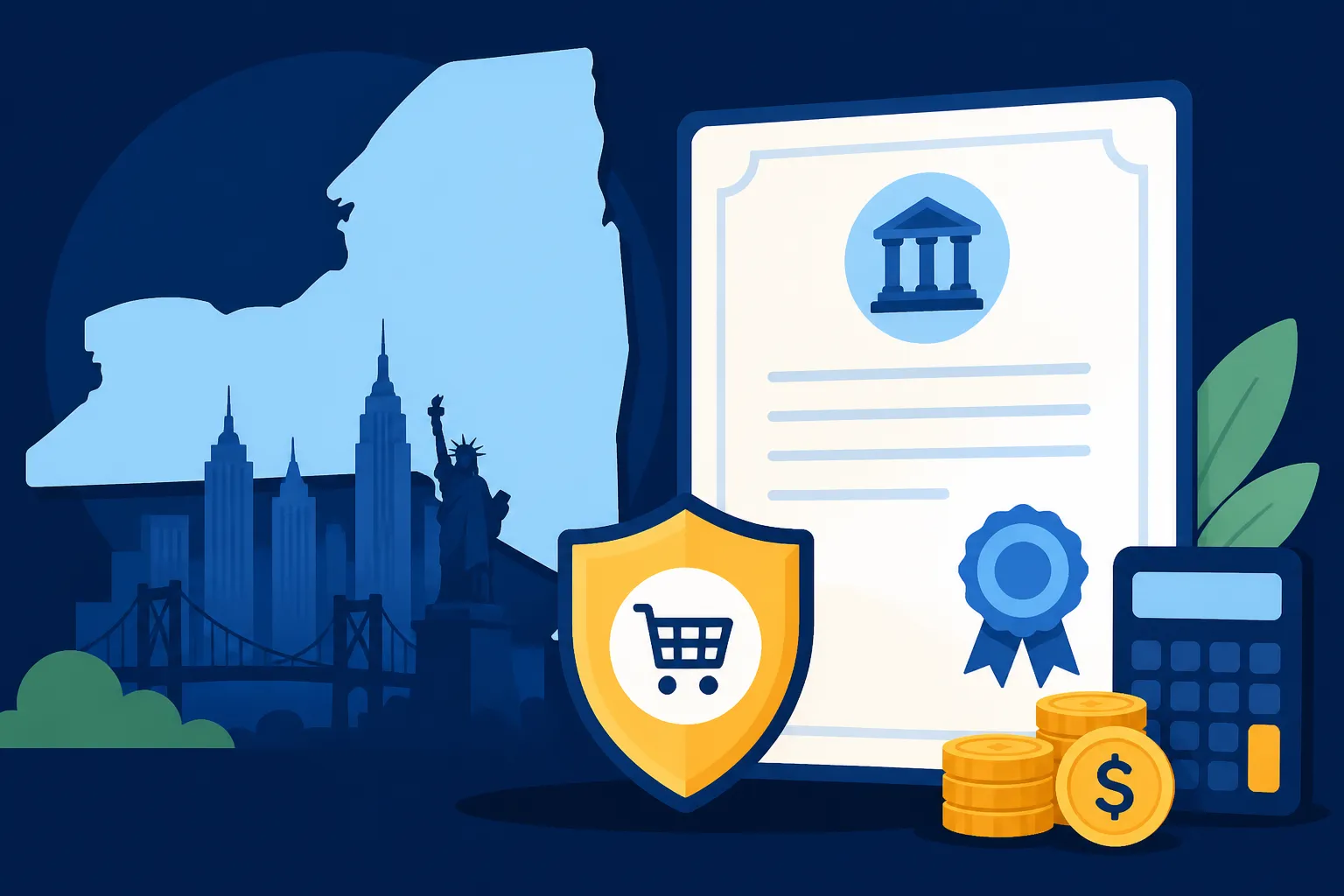
If you're starting a business in New York or expanding your existing operations here, you’ve probably heard whispers about needing a "sales tax permit" or a "seller's permit." In New York State, the official term for this essential document is a Certificate of Authority. Think of it as your official license from the New York State Department of Taxation and Finance (NYSDTF) that grants you the legal right to collect sales tax from your customers on behalf of the state. Without it, you simply cannot make taxable sales in New York.
More Than Just a Permit: The Official Authorization
It's not just a formality; the Certificate of Authority is a core component of New York's tax administration system. It signifies that your business is recognized by the state as a legitimate sales tax vendor. This authorization isn't just about collecting money; it's also about accountability. When you hold a Certificate of Authority, you become a trustee for the state, responsible for properly collecting sales tax from your customers and then remitting those funds to the NYSDTF. This legal obligation carries significant weight, and compliance is absolutely crucial for any business, big or small, physical or online, operating within the state's jurisdiction. It’s a formal acknowledgment that you’re playing by the rules.
Who Needs One to Do Business in New York?
This is a question many business owners ponder, and the answer is quite broad. Essentially, if your business has "nexus" in New York and makes taxable sales of goods or services, you need a Certificate of Authority.
- Physical Presence: If you have a physical presence in New York, such as a brick-and-mortar store, an office, a warehouse (including inventory in an Amazon FBA fulfillment center), or even employees working in the state, you almost certainly need a Certificate of Authority. This traditional form of nexus has always triggered sales tax obligations. For example, if you open a small boutique in Brooklyn or run a consulting firm out of an office in Buffalo, you’ll need this permit to legally charge sales tax.
- Economic Nexus: Thanks to the landmark South Dakota v. Wayfair Supreme Court decision, online sellers and businesses without a physical footprint can also establish nexus based on their sales activity. In New York, the economic nexus threshold is met if you have over $500,000 in sales and 100 separate transactions into the state in the preceding four quarters. So, if your e-commerce store ships a lot of products to New York customers and meets these financial and transactional thresholds, you'll need to register. It doesn't matter if your warehouse is in California; if your digital storefront is selling heavily into New York, the state expects you to register.
- Marketplace Facilitators: If you sell exclusively through a marketplace facilitator like Amazon or Etsy, the marketplace itself is generally responsible for collecting and remitting sales tax on your behalf. However, if you also sell directly from your own website or through other channels and meet the nexus criteria, you'll still need your own Certificate of Authority. Don't assume just because a platform handles some of your sales tax that you're entirely off the hook. This is a common misunderstanding that can lead to compliance issues down the road. You can learn more about how Marketplace Facilitator Laws by State impact sellers.
How to Apply for Your New York Certificate of Authority
The good news is that applying for your New York Certificate of Authority is a relatively straightforward process, especially if you have all your ducks in a row. The state has made efforts to streamline this through its online portal.
Gathering Your Essential Information
Before you even think about clicking "apply," take some time to collect all the necessary details. This preparation will save you headaches later. Here's a checklist of what you'll typically need:
- Your Federal Employer Identification Number (EIN): If you operate as a sole proprietor, you might use your Social Security Number (SSN), but an EIN is generally required for other business structures like LLCs, corporations, and partnerships.
- Legal Business Name and Trade Name (DBA): Make sure these match your official business registration documents.
- Business Address and Mailing Address: Provide accurate contact information.
- Business Structure: (e.g., sole proprietorship, partnership, corporation, LLC).
- NAICS Code or Business Activity Description: This categorizes your business for tax purposes. You'll need to accurately describe what your business does.
- Owner/Officer Information: Details for all responsible parties, including names, SSNs, and addresses.
- Projected Start Date of Sales: When do you expect to begin making taxable sales in New York?
- Estimated Annual Taxable Sales: This helps the state determine your initial sales tax filing frequency. For instance, high-volume sellers will likely be assigned a monthly filing schedule, while smaller businesses might be quarterly or annually.
- Bank Account Information: For future electronic filing and payment.
Having all these details readily accessible will make the online application process much smoother and reduce the chances of errors or delays.
Navigating the Online Application Process
New York State utilizes the New York Business Express portal for various business registrations, including the application for a Certificate of Authority. This is generally the easiest and fastest way to apply.
- Access New York Business Express: Head to the official NY.gov website and find the Business Express section. You'll likely need to create an account if you don't already have one.
- Select "Register a Business": Follow the prompts to indicate that you are registering for sales tax.
- Complete the Application: You’ll be guided through a series of questions, inputting all the information you gathered in the previous step. Be meticulous and double-check every entry. Errors here can lead to delays or compliance issues.
- Review and Submit: Before final submission, take a moment to review your entire application. Once submitted, you'll receive a confirmation.
- Alternative Method – Form DTF-17: While online is preferred, you can also apply by mail using Form DTF-17, Application for a Certificate of Authority. However, this method will take significantly longer for processing.
The online system is designed to be user-friendly, providing guidance as you go. It's often much quicker than paper applications, with many businesses receiving their Certificate of Authority or a temporary confirmation within days. To get started, you can visit the official New York State Department of Taxation and Finance website directly. For a deeper dive into the overall process, our guide on How to Get a Sales Tax Permit by State offers more context.
What Happens After You Apply?
Once your application is submitted, the NYSDTF will review it. If everything is in order, you’ll typically receive your official Certificate of Authority in the mail within a few weeks. This document will include your sales tax vendor identification number, which is crucial for all your sales tax activities.
- Vendor ID Number: This unique number identifies your business to the state for all sales tax matters. Keep it safe and readily accessible.
- Filing Frequency: Along with your certificate, the state will inform you of your assigned sales tax filing frequency – whether you need to file monthly, quarterly, or annually. This is usually based on your estimated sales volume. For businesses with significant sales, expect a monthly filing requirement.
- Effective Date: The certificate will also clearly state the date from which you are authorized (and required) to begin collecting sales tax. Do not collect sales tax before this date, and certainly don't make taxable sales without the proper authorization.
Remember, even after receiving your certificate, the journey isn't over. It's just the beginning of your sales tax compliance responsibilities in New York.
Responsibilities That Come With Your Certificate of Authority
Obtaining your Certificate of Authority is a crucial first step, but it’s really just the entry point into a continuous cycle of sales tax compliance. Once you have this authorization, you take on several important responsibilities to the state. Ignoring these can lead to penalties, fines, and unwanted attention from the NYSDTF.
Collecting and Remitting Sales Tax Accurately
Your primary responsibility is to correctly collect sales tax from your customers on all taxable sales you make in New York. This might sound simple, but it’s often where businesses stumble. New York has a state sales tax rate of 4%, but local jurisdictions – counties and cities – can impose their own additional sales taxes, making the combined rate vary significantly across the state. For example, the combined sales tax rate in New York City is 8.875% (4% state + 4.5% NYC + 0.375% Metropolitan Commuter Transportation District surcharge).
- Destination-Based Sourcing: New York is generally a destination-based sales tax state for out-of-state sellers, meaning you apply the sales tax rate of the buyer’s location. This can get incredibly complex when shipping to different addresses across the state, as each ZIP code or even specific street address can have a slightly different combined rate. For sellers within New York, it’s usually origin-based for physical locations, but destination-based for remote sales. Knowing the correct rate for every transaction is paramount. Our guide on Combined State + Local Sales Tax Rates Explained can provide further clarity.
- Taxable Goods and Services: Not everything is taxable. While most tangible personal property is subject to sales tax, certain items like most unprepared food (groceries) and some clothing items (under a specific price threshold in NYC and some other locales) might be exempt. Services are generally not taxable unless specifically listed by the state. You need to understand which of your products or services fall under New York's taxable definitions. For insights on specific items, consider resources like Is Clothing Taxable in New York? ($110 Rule) or Is SaaS Taxable in New York?.
Understanding Your Filing Frequency and Due Dates
The NYSDTF assigns you a filing frequency (monthly, quarterly, or annually) based on your estimated taxable sales. Your Certificate of Authority will specify this. It is your responsibility to know these deadlines and file your sales tax returns on time, even if you had no sales tax to report (a "zero return").
- Monthly Filers: Typically, businesses with high sales volumes. Returns are due on the 20th of the month following the reporting period.
- Quarterly Filers: The most common frequency, often assigned to small and medium-sized businesses. New York's quarters are usually March, June, September, and December, with returns due by the 20th of the month following the end of the quarter. However, New York sometimes has "off-calendar" quarters for certain businesses, so always confirm your specific schedule. Our article on New York Sales Tax Due Dates 2026 can help you stay on track.
- Annual Filers: Reserved for businesses with very low taxable sales.
- Electronic Filing: New York strongly encourages, and often requires, electronic filing for sales tax returns. You can usually do this through the NYSDTF website. It's faster, reduces errors, and often provides immediate confirmation.
Failing to file or pay on time can result in penalties and interest. The state takes sales tax seriously, and late filings are often flagged quickly.
Keeping Meticulous Records
Good record-keeping isn't just a suggestion; it's a legal requirement. The NYSDTF expects you to maintain detailed records of all your sales, taxable and non-taxable, as well as any sales tax collected and remitted.
- Sales Invoices and Receipts: Keep copies of all sales transactions, clearly indicating the sales tax collected (or reason for exemption).
- Exemption Certificates: If you make tax-exempt sales (e.g., to a government entity, a resale for another business with a Resale Certificate in New York (ST-120)), you must have a valid exemption certificate from the buyer on file. Without it, you could be held liable for the uncollected tax if audited.
- Sales Tax Returns and Payment Records: Keep copies of every sales tax return you file and proof of payment.
- Sales Data: Detailed records that show where sales originated, where they were shipped, and the specific rates applied. This is critical for defending your tax calculations during an audit.
These records should be maintained for at least three years, though some tax professionals recommend longer. In the event of an audit, these records are your first line of defense, demonstrating your commitment to compliance.
Common Pitfalls and Why Compliance Matters
The complexities of sales tax, especially in a large state like New York with its varying local rates and rules, can be daunting. Many businesses, even with the best intentions, can fall into common traps. Understanding these pitfalls and the importance of strict compliance is key to avoiding costly problems down the road.
Operating Without a Certificate: The Risks
The temptation to "just start selling" and worry about the paperwork later can be strong for eager entrepreneurs. However, operating without a valid New York Certificate of Authority when required is a serious violation that carries significant risks.
- Penalties and Fines: The NYSDTF can impose substantial penalties for failing to register, collect, or remit sales tax. These can include a percentage of the uncollected tax, plus interest, and even additional fines. These charges can quickly add up, turning a small oversight into a major financial burden.
- Retroactive Liability: If the state discovers you've been operating without a certificate, they can hold you liable for all the sales tax you should have collected, retroactively, often for several years. This means you would owe the state money that you never actually collected from your customers, which can be devastating for a business's cash flow.
- Legal Action: In severe cases of willful neglect or evasion, the state can pursue legal action, which could include criminal charges. While rare for honest mistakes, it underscores the seriousness of sales tax obligations.
- Reputational Damage: Dealing with tax issues can severely damage a business's reputation, eroding customer trust and making it harder to operate. Transparency and compliance signal reliability.
Imagine a scenario where a small online apparel shop based in Albany has been selling to customers across the state for two years, unknowingly meeting the Economic Nexus Threshold in New York ($500k + 100 Sales) but never registered. An audit could reveal hundreds of thousands in uncollected sales tax, all of which the business owner would now be personally liable for, plus penalties. It’s a nightmare scenario that proper registration avoids.
When Your Business Changes: Amendments and Closures
Your sales tax obligations don't just stop once you get your certificate and start filing. Businesses are dynamic, and changes in your operations may require you to update your Certificate of Authority or related tax registrations.
- Changes in Business Information: If your business name, address, or ownership structure changes, you must notify the NYSDTF promptly. This usually involves filing an amendment through the New York Business Express portal or submitting specific forms. Keeping your information current ensures you receive important notices and remain compliant. For example, if you move your main office from Manhattan to Rochester, you'll need to update your registered business address.
- Changing Business Activity: If you significantly alter the type of goods or services you sell, you might need to update your business activity codes to ensure you're correctly taxing your new offerings.
- Closing Your Business: If you decide to cease operations in New York, you cannot simply stop filing sales tax returns. You must formally close or surrender your Certificate of Authority. This typically involves filing a final sales tax return and indicating that you are closing your account. Failing to do so can result in the state continuing to expect returns, leading to non-filing penalties even if you're no longer in business. Our guide on How to Close or Amend a Sales Tax Account offers further details on this important step.
Leveraging Technology for Easier Compliance
Given the intricate nature of sales tax, especially for businesses selling across various locations in New York and beyond, manually tracking rates, nexus, and filing obligations can become an overwhelming full-time job. This is where sales tax automation software becomes incredibly valuable.
Tools like Avalara are specifically designed to handle these complexities, helping businesses large and small automate the sales tax process from calculation to filing.
- Automated Rate Calculation: These solutions integrate with your e-commerce platform or POS system to automatically apply the correct sales tax rate at the point of sale, based on the customer's address and the specific product being sold. This eliminates the guesswork and reduces errors, which is invaluable when dealing with varying local rates within New York.
- Nexus Monitoring: Advanced software can help you monitor your sales activity against economic nexus thresholds in New York and other states, alerting you when you're approaching or exceeding these limits, so you can register proactively.
- Filing and Remittance: Many solutions can prepare and even file your sales tax returns directly with the NYSDTF and other state agencies, ensuring you meet all your Sales Tax Due Dates by State 2026 and freeing up your time to focus on your core business.
- Audit Trail: These systems maintain detailed transaction records, providing a robust audit trail that can be invaluable if the NYSDTF ever comes calling.
For any business serious about growth and compliance in New York, investing in a reliable sales tax solution can transform a daunting task into a manageable automated process. It’s about working smarter, not harder, to ensure you stay on the right side of New York's tax laws.
Key New York Certificate of Authority Information
Here's a quick summary of key aspects regarding the New York Certificate of Authority:
| Aspect | Description |
|---|---|
| What it is | New York State's official sales tax permit, authorizing you to collect and remit sales tax. |
| Who Needs It | Any business with physical or economic nexus in NY making taxable sales. |
| Application Method | Primarily online via the New York Business Express portal (preferred) or by mail using Form DTF-17. |
| Key Information Req. | EIN/SSN, business name, address, structure, start date, estimated sales, owner details. |
| Cost | There is no direct fee to apply for a Certificate of Authority in New York. |
| Filing Frequency | Assigned by NYSDTF (monthly, quarterly, or annually) based on sales volume. |
| Key Responsibility | Accurate collection, timely remittance, and meticulous record-keeping of sales tax. |
| Penalties | Fines, interest, retroactive liability, and potential legal action for non-compliance. |
Disclaimer
The information provided in this guide is for general informational purposes only and does not constitute professional tax advice. Sales tax laws are complex and subject to change. Always consult with a qualified tax professional or the New York State Department of Taxation and Finance for advice tailored to your specific business situation.