Does Amazon FBA Create Nexus in Other States?
The world of online selling, especially through platforms like Amazon FBA, can feel like navigating a sales tax minefield. Many sellers understandably get tripped up by the question of whether simply storing inventory in an Amazon warehouse automatically creates sales tax obligations in a state they’ve never even visited. It’s a common and frankly, terrifying, frustration, knowing you might be unknowingly racking up liabilities across the country. This guide aims to demystify the complex relationship between Amazon FBA and sales tax nexus, helping you understand your obligations and offering practical steps for compliance.
Understanding Sales Tax Nexus and FBA
Before we dive into the specifics of Amazon FBA, let's nail down what "sales tax nexus" actually means. It's the legal term for having a sufficient connection to a state that requires you to collect and remit sales tax. Without nexus, you generally don't have to worry about that state's sales tax. But here's where it gets tricky for FBA sellers – those connections can be far less obvious than having a brick-and-mortar store.
What Exactly is Nexus?
Historically, nexus was all about physical presence. Think of it: a shop, an office, employees, or even just a traveling salesperson making calls. If you had a physical foot in the door in a state, you had nexus. This is often referred to as "physical nexus."
Then came the rise of e-commerce, and states started feeling the pinch of lost tax revenue. This led to the concept of "economic nexus," where a certain amount of sales volume or transaction count into a state, even without physical presence, could trigger a sales tax obligation. We’ll talk more about that, but for FBA sellers, physical nexus due to inventory storage is a huge piece of the puzzle. Imagine having your products sitting in an Amazon fulfillment center in a state like Florida or Texas – suddenly, you might have a physical presence there without ever stepping foot in it. This inventory often creates a tangible link, making you responsible for collecting sales tax from customers in that state. You can learn more about the distinction between physical and economic nexus in our guide on Sales Tax Nexus Explained Physical vs Economic.
The FBA Inventory Dilemma
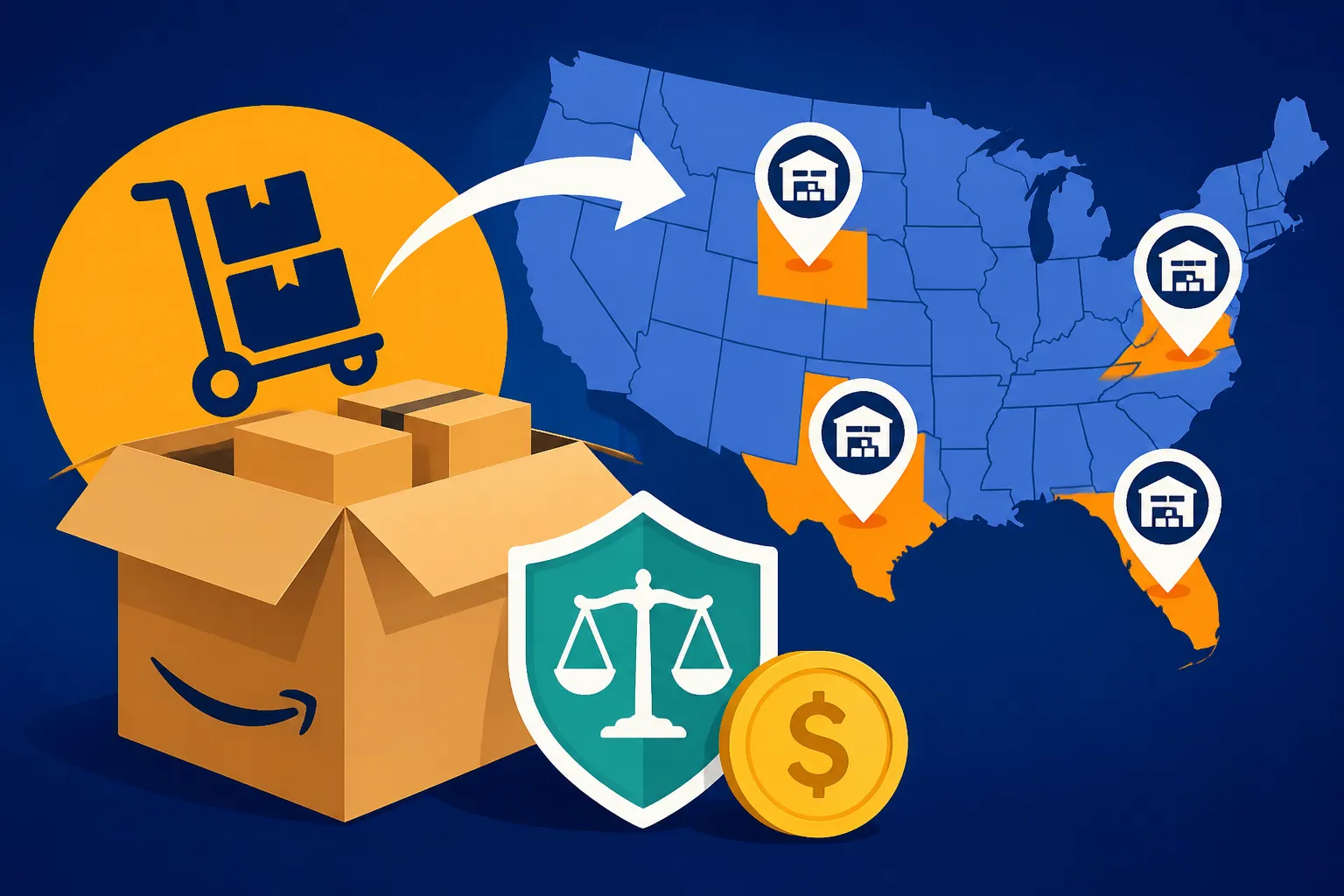
Here’s the core of the FBA sales tax challenge: when you send your products to Amazon for fulfillment, you’re not choosing a specific warehouse. Amazon’s sophisticated logistics system distributes your inventory across various fulfillment centers nationwide to optimize shipping times and costs. This means your goods could be stored in warehouses in California, Arizona, New Jersey, or a dozen other states at any given moment. Each of these locations where your inventory is held can establish a physical nexus for your business in that state.
For example, if Amazon stores some of your products in a fulfillment center near Phoenix, Arizona, you could be considered to have physical nexus in Arizona. This means you would be required to collect sales tax on sales shipped to Arizona customers, even if your business is based entirely in another state, like Oregon, which has no state sales tax. It's a massive shift from traditional retail and often catches sellers completely off guard. The moment your inventory lands in a state, many state tax authorities consider you to have a physical presence, creating a sales tax collection requirement. This is a critical point that many FBA sellers grapple with, as they might not even know where their inventory is at any given time without diving deep into Amazon's reports.
Beyond Physical Inventory: Economic Nexus Still Applies
While physical nexus from FBA inventory is a unique challenge, don't forget that economic nexus rules still apply to your overall sales activities. After the landmark South Dakota v. Wayfair decision, most states implemented economic nexus thresholds. These typically involve a certain dollar amount of sales (e.g., $100,000) or a specific number of transactions (e.g., 200 sales) into a state within a calendar year.
So, an FBA seller could potentially have nexus in a state in two ways:
- Physical Nexus: Due to Amazon storing their inventory in a fulfillment center within that state.
- Economic Nexus: Due to exceeding that state's sales or transaction thresholds, regardless of where their inventory is located.
It's a "double whammy" for many. For instance, you might have physical nexus in a state like Washington because Amazon put your widgets in a Seattle-area warehouse, and you might also have economic nexus there because your total sales to Washington customers (even from other warehouses) surpassed their threshold. Keeping track of both types of nexus is essential for complete compliance. Our article on Economic Nexus by State 2026: Thresholds Guide provides a detailed breakdown of these thresholds.
The Wayfair Decision's Ripple Effect on FBA Sellers
The Supreme Court's 2018 ruling in South Dakota v. Wayfair fundamentally reshaped the sales tax landscape for online businesses. Before Wayfair, physical presence was generally the only trigger for sales tax nexus. After Wayfair, states gained the authority to require out-of-state sellers to collect sales tax if they met certain economic thresholds. This decision had a profound impact on FBA sellers, layering new complexities onto their existing physical nexus concerns.
How Wayfair Changed the Game for Online Sellers
The Wayfair decision validated the concept of economic nexus. This meant that even if you never physically set foot in a state, never hired an employee there, and never stored your inventory there, if your sales into that state crossed a certain dollar amount or number of transactions, you could be obligated to collect sales tax. For FBA sellers, this added an entirely new dimension of compliance. Suddenly, not only did you have to worry about where Amazon was storing your inventory (physical nexus), but you also had to monitor your sales volume into every single state to determine if you were meeting economic nexus thresholds.
This created a massive headache for small and medium-sized businesses selling online. Imagine a thriving boutique selling unique handmade jewelry via Amazon FBA. Before Wayfair, they might have only worried about sales tax in their home state and perhaps one or two FBA warehouse states. Post-Wayfair, they now need to track sales to all 45 states (and D.C.) that have a sales tax, because any of them could assert economic nexus. This administrative burden can be overwhelming, especially for businesses without dedicated accounting teams.
Dual Nexus: When Both Apply
For many FBA sellers, the reality is that they often face "dual nexus" in several states. This means they have both a physical presence (due to Amazon FBA inventory) and meet economic nexus thresholds in the same state. While the obligation to collect tax is the same, understanding why you have nexus can impact your long-term strategy and audit readiness.
Consider a scenario: Your business is in Colorado. You sell a lot of merchandise through FBA, and Amazon regularly stores your items in warehouses in California and Texas.
- California: You likely have physical nexus because your products are stored there. Additionally, given California's large population, you might also easily surpass their $500,000 economic nexus threshold. This creates a dual nexus situation.
- Texas: Similar to California, inventory in a Texas fulfillment center (like the ones around Dallas or Houston) would establish physical nexus. If your sales into Texas also exceed their $500,000 economic nexus threshold, you again have dual nexus.
This dual nexus emphasizes the importance of a robust system for tracking both inventory movements and sales data. You can't just pick one type of nexus to monitor; you really need to be aware of all potential triggers. It's a common misconception that if Amazon collects sales tax due to marketplace facilitator laws (which we'll discuss later), that your own nexus obligations disappear. That's not always true, especially if you sell on your own website or other platforms where Amazon isn't collecting for you.
Practical Steps for Identifying and Managing FBA Nexus
Feeling overwhelmed? You're not alone. The complexity of FBA sales tax nexus is a huge burden for sellers. The good news is there are concrete steps you can take to understand and manage your obligations, moving from a state of anxiety to one of controlled compliance.
Tools and Strategies for Tracking Inventory Nexus
The first crucial step is to figure out where your FBA inventory has been and is currently located. Amazon provides reports that can help, though they require some digging.
- Inventory Event Detail Report: This report shows the movement of your inventory between Amazon fulfillment centers. It can be a goldmine for understanding where your products have been stored.
- Daily Inventory History Report: This offers a snapshot of your inventory levels in different warehouses on a given day.
- Manage FBA Inventory Page: While not a report, this page can show current inventory locations, though it might not be comprehensive for historical data.
Analyzing these reports manually can be incredibly time-consuming, especially for sellers with high inventory turnover or a wide variety of SKUs. This is where sales tax automation software becomes invaluable. Companies like Avalara offer solutions specifically designed to integrate with Amazon Seller Central. These tools can automatically pull your inventory data, analyze it against state nexus rules, and tell you exactly where you have established physical nexus due to FBA inventory. They can also help you track your sales thresholds for economic nexus, providing a clear picture of your obligations. This significantly reduces the manual effort and the risk of human error, allowing you to focus on growing your business instead of deciphering complex tax reports.
Steps to Achieve Compliance
Once you've identified your nexus states, it's time to take action. This process typically involves three main stages:
- Register for a Sales Tax Permit: For every state where you've established nexus (either physical or economic), you'll need to register with that state's tax authority to get a sales tax permit. This is absolutely critical; you cannot legally collect sales tax until you are registered. Each state has its own application process, which can vary in complexity. Some states, like California or New York, require extensive information, while others are more straightforward. Our guide on How to Register for Sales Tax in Multiple States can walk you through the general process.
- Collect Sales Tax: Once registered, you need to configure your Amazon seller account to collect sales tax in those states. Amazon provides settings to do this, allowing you to specify the states where you have nexus and the rates to apply. Remember, you must collect the correct sales tax rate, which often includes state, county, and local components. For instance, in Colorado, many "home-rule" cities set their own sales tax rates, which can be different from the state rate and other municipalities. Our article on Combined State + Local Sales Tax Rates Explained can help clarify this.
- File Sales Tax Returns: Regularly, usually monthly, quarterly, or annually, you'll need to file sales tax returns and remit the collected tax to each state. This involves reporting your gross sales, taxable sales, and the sales tax collected. Again, automation software like Avalara can streamline this process by generating accurate reports and even filing returns on your behalf, significantly reducing the administrative burden. Without such tools, manual filing for multiple states can quickly become a full-time job.
What if You Discovered Nexus Retroactively?
It's common for FBA sellers to realize they've had nexus in a state for a while without knowing it, leading to uncollected sales tax. This "oh no" moment is understandable and not uncommon. Ignoring it, however, is not an option. States can come knocking for back taxes, interest, and penalties.
If you find yourself in this situation, one potential solution is a Voluntary Disclosure Agreement (VDA). A VDA is an agreement with a state that allows you to come forward voluntarily, report and pay back taxes (usually for a limited lookback period, often three to five years), and in return, the state typically waives penalties. This can save you a significant amount of money compared to waiting for the state to discover you, which could result in a longer lookback period and hefty penalties. However, VDAs are only an option if the state hasn't already contacted you about your sales tax obligations. It's always best to consult with a sales tax professional or use a service that specializes in VDA applications to ensure you navigate this process correctly.
Navigating Marketplace Facilitator Laws and Ongoing Compliance
The sales tax landscape for FBA sellers keeps evolving, with marketplace facilitator laws adding another layer of complexity. While these laws aim to simplify things for sellers by shifting collection responsibility, they don't entirely absolve you of all obligations. Understanding these nuances is key to maintaining long-term compliance.
Marketplace Facilitator Laws: How They Affect FBA Sellers
A significant development in sales tax compliance for online sellers has been the widespread adoption of marketplace facilitator laws. These laws generally require marketplaces, such as Amazon, eBay, and Etsy, to calculate, collect, and remit sales tax on behalf of their third-party sellers for sales made through their platform. This was a direct response to the Wayfair decision, as states sought to ensure tax collection on the vast number of online transactions.
For an FBA seller, this is generally great news for sales made through Amazon.com. If a state has a marketplace facilitator law in effect (and nearly all states with sales tax do), Amazon will typically handle the sales tax for your sales to customers in that state. This means you, the individual seller, don't need to worry about calculating or collecting tax on those specific transactions. However, it's crucial to remember a few things:
- Your Nexus Still Exists: Amazon collecting sales tax doesn't erase your underlying nexus in a state. You might still have physical nexus due to FBA inventory or economic nexus from your overall sales.
- Sales Outside Amazon: If you also sell on your own website, through another platform that isn't a marketplace facilitator, or via wholesale, you are still responsible for collecting and remitting sales tax on those sales in any state where you have nexus. This is a common pitfall: many sellers mistakenly believe that because Amazon handles some sales tax, all their sales tax worries are gone. That’s often not the case. Our article Marketplace Facilitator Laws by State provides a comprehensive overview of how these laws work.
- Filing Requirements: Even if Amazon collects all your sales tax for sales on their platform, you may still have a filing obligation with the state, often to report your zero-taxable sales if you have no direct sales. Always check with the specific state's department of revenue.
The Importance of Regular Review
Sales tax nexus is not a "set it and forget it" situation. State laws, economic nexus thresholds, and even Amazon's internal inventory distribution can change. What was true for your business last year might not be true today.
- Monitor Inventory Reports: Regularly check your FBA inventory reports, perhaps quarterly, to see if Amazon has started storing your goods in new states. New inventory locations mean new potential physical nexus.
- Track Sales Data: Keep a close eye on your total sales and transaction counts into all states. This will help you identify when you're approaching or exceeding economic nexus thresholds. Remember, these thresholds reset annually.
- Stay Informed on Law Changes: States frequently update their sales tax laws, including thresholds, definitions of taxable goods and services, and marketplace facilitator requirements. What is taxable today might not be tomorrow, or vice-versa. For instance, sometimes clothing has specific exemption rules, like in New York for items under $110, or certain food items might be exempt.
- Utilize Automation: This is where solutions like Avalara truly shine. They can help you stay on top of these changes automatically, providing alerts when your nexus status might change and ensuring your tax calculations are always up-to-date with the latest state laws. This ongoing vigilance is critical to avoid costly surprises down the road.
By understanding the intricacies of physical and economic nexus, the impact of the Wayfair decision, and the role of marketplace facilitator laws, FBA sellers can develop a robust strategy for sales tax compliance. It takes effort, but with the right tools and knowledge, it's an achievable goal that protects your business and gives you peace of mind.
Sales Tax Nexus for FBA Sellers: Key Considerations
Let's put some of this into a digestible format, focusing on common triggers and important notes for FBA sellers.
| Nexus Trigger | Description | FBA Seller Impact |
|---|---|---|
| Physical Presence (Inventory) | Having goods stored in a warehouse, even a third-party one like an Amazon Fulfillment Center, within a state. | High: Amazon distributes your inventory to various states to optimize shipping. Each state where your FBA inventory is stored can create physical nexus, requiring you to register and collect sales tax for sales into that state (unless a marketplace facilitator collects for you). |
| Economic Nexus | Exceeding a state-specific threshold of sales revenue (e.g., $100,000) or number of transactions (e.g., 200) into a state over a defined period (usually a calendar year). | High: You must track total sales (both through Amazon and other channels) into all states. If you meet the threshold, you establish economic nexus and must register and collect sales tax for sales into that state. |
| Marketplace Facilitator Laws | State laws requiring marketplaces (like Amazon) to collect and remit sales tax on behalf of third-party sellers for sales made through their platform. | Significant Relief for Amazon.com Sales: For sales made on Amazon.com, Amazon usually handles the sales tax. BUT, your own nexus still exists, and you're responsible for sales tax on sales made off Amazon (e.g., your own website) to customers in your nexus states. |
| Employee Presence | Having employees (even remote ones) residing in a state. | Low/Moderate: If you're a solopreneur FBA seller, this might not apply. However, if your business grows and you hire virtual assistants or contractors in other states, this could trigger nexus for your direct sales. |
| Trade Shows/Events | Temporarily setting up a booth or selling at an event in a state. | Low/Moderate: If you exclusively sell via FBA and online, this isn't a concern. But participating in a craft fair or trade show could create temporary physical nexus. |
Disclaimer
Please remember that this article provides general information and is not intended as legal or tax advice. Sales tax laws are highly complex and can change frequently. It is always recommended to consult with a qualified tax professional or refer to the specific state's tax authority for advice tailored to your individual business situation.