Do Tax-Free Weekends Apply to Computers?
Trying to figure out if that new laptop or tablet you've been eyeing will be sales tax-free during your state's tax holiday can feel like deciphering a secret code. It's confusing, frustrating, and honestly, a bit unfair when you're just trying to save a few bucks on what's become essential tech for work, school, and daily life. This comprehensive guide is here to untangle the complex rules, help you understand exactly which states offer sales tax exemptions for computers, and empower you to make informed purchases during these special shopping events.
Understanding Sales Tax Holidays and Their Purpose
Sales tax holidays, often referred to as "tax-free weekends," are designated periods when certain items are exempt from sales tax. These events are designed to give consumers a break on specific purchases, typically with an economic stimulus goal in mind. States hope that by removing the sales tax burden for a short time, consumers will be encouraged to spend more, boosting local businesses and injecting cash into the economy. For families, especially those with kids heading back to school, these holidays can offer significant savings on everything from clothes to school supplies, and sometimes, those pricier tech items like computers.
The Idea Behind Tax-Free Weekends
The core idea is simple: temporarily remove a tax to incentivize buying. Think about it – if you know you can save 4%, 6%, or even over 8% on a significant purchase like a new computer, it might just push you to make that purchase during the tax holiday instead of waiting. This creates a surge in retail activity, benefiting businesses, and theoretically, the state through increased overall sales volume. For consumers, it's a welcome relief, especially when budgets are tight. It’s a win-win, provided you know what items actually qualify. You might be surprised at the variety of items included, beyond just school essentials.
Types of Tax Holidays
Not all sales tax holidays are created equal. While many states host a general Tax-Free Weekend Back-to-School Guide 2026 in late July or early August, focusing on apparel and school supplies, others offer more specialized exemptions. Some states, for instance, have dedicated holidays for energy-efficient appliances, hurricane preparedness items, or even firearms and hunting supplies. The items that qualify can vary wildly from state to state, and even within the same state, from year to year. This is why a computer might be tax-exempt in one state's holiday, but not in another, or even not in the same state's other tax holiday. It's crucial to check the specific rules for the particular event you're shopping during.
General Rules of Engagement
While the specifics change, there are some common threads across most sales tax holidays. First, there's usually a dollar limit per item. For clothing, it might be $100 per item, meaning a single shirt over that price would still be taxed. For computers, these limits tend to be much higher, reflecting the higher cost of the item. Second, the exemption applies only to eligible items purchased during the specific dates of the holiday. Items bought before or after the designated window will be subject to normal sales tax. Third, not all retailers participate equally, or sometimes, the point-of-sale system needs to be correctly configured to apply the exemption. If you're running a business, ensuring your system handles these temporary changes is paramount, and many leverage sales tax compliance software like Avalara to manage these fluctuating rules.
The Computer Conundrum: Why It's Not Always Simple
When it comes to sales tax holidays, "computers" are often the trickiest category. Unlike a pencil or a pair of jeans, what constitutes a "computer" isn't always clear-cut in the eyes of tax law. Is a tablet a computer? What about an e-reader? Or just the keyboard and mouse? These distinctions can dramatically affect whether your potential purchase qualifies for an exemption, leading to a lot of shopper frustration at the checkout.
Defining "Computer" for Tax Purposes
Each state that includes computers in its sales tax holiday will have its own precise definition. Generally, a "computer" is an electronic device that accepts information in digital or similar form and manipulates it for a result based on a sequence of instructions. This typically covers desktop computers, laptops, and sometimes tablets. However, some states might explicitly exclude items like cellular phones, smart TVs, or gaming consoles, even though these devices possess significant computing power. For instance, while a high-end laptop might qualify, a Nintendo Switch, despite its impressive processing, likely wouldn't because it's primarily classified as a gaming device. It's this nuanced legal language that often catches shoppers off guard.
Accessories Versus Core Units
Another layer of complexity arises with computer accessories and peripherals. Is a printer part of the computer? What about a webcam, external hard drive, or a specific piece of software? Again, state laws vary. Some states are generous, including a broad range of related accessories or software if they are sold with an eligible computer. Others are very strict, exempting only the core computer unit itself. For example, some states might consider a basic mouse and keyboard essential for a desktop computer and thus exempt them, but a specialized gaming mouse or an expensive software suite bought separately might not qualify. This is where researching your state's specific guidelines becomes absolutely critical; simply assuming all tech is included is a common mistake.
Bundle Deals and Upgrades
What happens when you buy a "bundle" – a computer packaged with software, a printer, or an extended warranty? This can get even more complicated. Many states will apply the exemption to the entire bundle, provided the primary item (the computer) falls within the qualifying rules and price limits. However, if the non-qualifying items in the bundle make up a significant portion of the total price, or if the bundle price exceeds the state's cap, the entire purchase might become taxable, or only a portion of it might be exempt. Similarly, upgrades like extra RAM or a solid-state drive installed at the time of purchase are often included, but again, this hinges on how your specific state defines the scope of the exemption. It's not uncommon for retailers to have detailed policies to navigate these bundles, and a reliable sales tax solution can help ensure their systems are configured correctly to handle these scenarios.
Common Price Caps and Eligibility Rules for Computers
The biggest hurdle for computers during sales tax holidays isn't usually if they're eligible, but how much of a computer is eligible. States almost universally impose price caps on exempt items, and for computers, these caps are generally much higher than for clothing or school supplies, but they still exist and can be quite limiting for high-end tech.
Typical Price Thresholds
For back-to-school tax holidays, you'll often see price limits like $1,000, $1,500, or even $2,500 for computers. For example, states like Massachusetts and South Carolina have historically offered exemptions on computers up to a certain dollar amount. If you’re looking at a $800 Chromebook, you’re likely in the clear. But if you’re eyeing a $3,000 MacBook Pro, you might still be paying sales tax on a portion of that, or the entire thing if the cap is $1,500. These caps are put in place to ensure the holiday benefits a broader range of consumers buying more standard equipment rather than providing a tax break on luxury tech. Always check the specific dollar limit your state has set for the current year.
Specific Software and Peripherals
Beyond the computer itself, the eligibility of software and peripherals is another common question. Many states will include certain "computer accessories" or "software" in their definition, but again, with specific caveats. Often, the software must be "non-recreational" or "educational" in nature. So, while Microsoft Office or design software might be exempt, the latest video game or a subscription to a streaming service probably won't be. Similarly, peripherals like printers, scanners, flash drives, or even printer paper might be included, usually with their own lower price caps (e.g., $50 or $100). The key here is whether these items are necessary for the basic function of a computer or schoolwork, versus being purely for entertainment or specialized professional use.
Online Versus In-Store Purchases
A common question that pops up every year is: Does Online Shopping Count for Tax-Free Weekend? The good news is, for the most part, yes! Most states extend their sales tax holiday exemptions to online purchases as long as the item is ordered and paid for during the eligible dates and delivered to an address within the state. However, the exact timing of the order, shipment, and payment processing can sometimes create confusion. It's always best to complete your online purchase well within the holiday window to avoid any last-minute glitches that might prevent the exemption from being applied. This often means placing your order by the end of the day on the final day of the holiday, usually midnight in the retailer's time zone, or sometimes the customer's time zone, depending on state rules.
State-by-State Breakdown: Computer Eligibility
The rules for sales tax holidays, especially concerning computers, are a patchwork across the country. What's tax-exempt in one state might be fully taxed just across the border. It requires careful research, and often a quick glance at your state's Department of Revenue website before you hit "add to cart."
States That Include Computers
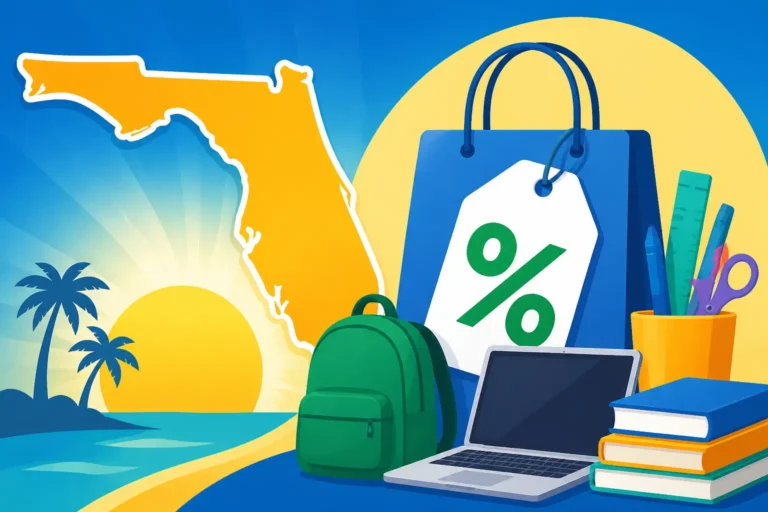
A handful of states consistently include computers and related accessories in their sales tax holidays, often with generous caps. For instance, Massachusetts has historically offered a broad tax-free weekend that often includes computers with no specific price cap, making it a popular time for big-ticket tech purchases. South Carolina also tends to include computers, printers, and software, usually with a specific dollar limit. In Florida, their back-to-school tax holiday often includes personal computers up to a certain price (often $1,500) and related accessories. Florida Back-to-School Tax Holiday (All August) is a prime example of a state trying to make tech more accessible for students. Even in states like Tennessee, while primarily focused on clothing and school supplies, there might be provisions for personal computers or educational software up to a certain amount. The key is to remember these can change year to year, so always confirm the latest details.
States That Exclude or Have Stricter Rules
On the flip side, many states' sales tax holidays are much more restrictive, focusing almost exclusively on clothing and traditional school supplies. Texas, for example, is famous for its back-to-school holiday, but historically, it has not included computers or most electronics in its exempt list, focusing instead on apparel under $100 and basic school supplies. This means if you're shopping for a computer during the Texas Tax-Free Weekend 2026 (Aug 7-9), you'll likely still be paying the full sales tax. Similarly, states like Virginia (though their general sales tax holiday is set to expire in July 2026) or Oklahoma tend to keep their exemptions centered around clothing and school essentials. It's not that these states don't want you to save money on tech, but their legislative priorities for the tax holiday might be different, focusing on immediate, basic needs.
Checking Your Specific State's Guidelines
Given the variability, the best course of action is always to consult your state's Department of Revenue or taxation website directly. They will publish the official list of eligible items, specific dates, and any applicable price caps well in advance of the holiday. Don't rely solely on news articles or store advertisements, as these can sometimes generalize or miss critical details. Many states also offer handy FAQs or even mobile apps to help you quickly verify item eligibility. If you're a business owner operating across state lines, keeping track of these different rules can be a full-time job. This is where a service like Avalara becomes invaluable, providing up-to-date sales tax information and automation for compliance across all applicable jurisdictions. This level of detail ensures you're applying the correct tax, or exemption, every time.
Here's a quick look at a few common states and their historical computer eligibility for tax-free weekends. Please note these are subject to change annually; always verify with your state's official tax authority.
| State | Typical Dates (Approx.) | Computer Eligibility (Historical) | Price Cap (Approx.) | Notes |
|---|---|---|---|---|
| Florida | Early August | Personal computers, components, and accessories | $1,500 per item | Also includes software, often with a lower cap. |
| Massachusetts | Mid-August | Most tangible personal property, including computers | No cap (for general holiday) | Broader holiday, not strictly back-to-school specific. |
| South Carolina | Early August | Computers, printers, software, accessories | No cap | Very broad, includes most items for school or home office. |
| Tennessee | Late July | Personal computers for non-commercial use | $1,500 per item | Primarily targets clothing and school supplies, but includes computers. |
| Texas | Early August | Generally Excluded | N/A | Focuses on clothing (<$100) and school supplies (<$100). |
| Maryland | Mid-August | Computers and related accessories (when included) | $1,000 per item | Primarily for back-to-school, check for computer inclusion. |
Shopping Smart During Tax-Free Weekends
The allure of a sales tax holiday is strong, especially when you're considering a significant purchase like a computer. However, a "tax-free" label doesn't automatically mean it's the absolute best deal out there. Smart shopping during these weekends involves a bit of preparation and critical thinking to ensure you're truly maximizing your savings.
Researching Before You Buy
Impulse buys are rarely the smartest financial decisions, and that holds true for tax-free weekends. Before the holiday even begins, do your homework. Compare prices from different retailers, both in-store and online. Sometimes, a retailer might offer a deeper discount during a regular sale that outshines the 4-8% sales tax saving. Look for advertised specials that coincide with the tax holiday. Websites and apps that track price history can be incredibly useful here. Knowing the typical price range for the computer you want will help you identify a genuine deal versus a mere sales tax exemption on an inflated price. Remember, the sales tax savings are usually a percentage of the net price, so a lower base price is always better.
Understanding What to Look For
Beyond just the price, consider the specific features and specifications you need in a computer. Don't just buy something because it's tax-free. Are you a student needing a basic laptop for word processing and online classes? Or are you a graphic designer requiring powerful processing and a high-resolution screen? Overspending on features you don't need, even if it's tax-free, isn't a saving. Similarly, be mindful of hidden costs. Does the computer come with essential software, or will you need to purchase that separately (and will that be tax-free)? Consider warranties, return policies, and customer support. A tax-free deal on a computer with a terrible warranty or no support might cost you more in the long run.
Maximizing Your Savings
To truly get the most out of a sales tax holiday, strategize your purchases. Combine the sales tax exemption with other promotions whenever possible, like store coupons, student discounts, or manufacturer rebates. If you have loyalty points or rewards programs, try to time your purchase to use those as well. For those living near state borders, it might even be worth checking if a neighboring state has a more favorable tax holiday for computers, though factor in travel time and gas costs. Also, consider buying any eligible accessories or software you might need at the same time to ensure they also fall under the tax-free umbrella. Don't forget about How Much Can You Save on Tax-Free Weekend? – for a $1,000 laptop, even a 6% sales tax saving is $60, which could buy you a nice new backpack or some textbooks!
Beyond Computers: Other Eligible Items During Tax-Free Weekends
While our focus here is on computers, it's worth remembering that sales tax holidays offer savings on a much broader range of items. Knowing what else might be exempt can help you plan your shopping list more effectively and combine your purchases for maximum benefit.
Back-to-School Essentials
This is arguably the most common category for sales tax holidays. States typically exempt clothing, footwear, and various school supplies up to certain price limits. For example, you might find clothing items under $100 per item, or school supplies like pens, paper, calculators, and art supplies under a similar cap, all free from sales tax. This is where most families see significant savings, especially when outfitting multiple children. Items like backpacks, lunchboxes, and even certain textbooks can often be included. Check out guides like What Qualifies for Tax-Free Weekend? or Tax-Free Weekend Clothing Price Limits ($100) for more specific details on these common items.
Emergency Preparedness Items
A growing number of states are offering sales tax holidays focused on emergency preparedness supplies. These holidays, often held in spring, aim to encourage residents to stock up on essentials like batteries, flashlights, first-aid kits, portable radios, and tarps. States prone to hurricanes, floods, or other natural disasters, like Florida and Texas, are often leaders in this category. The idea is to make sure citizens are ready for emergencies without the added burden of sales tax on vital survival gear.
Energy-Efficient Appliances
Another type of specialized sales tax holiday focuses on energy-efficient appliances. These typically include things like ENERGY STAR certified washing machines, refrigerators, air conditioners, and water heaters. The goal is two-fold: to stimulate the economy and to promote environmental conservation by encouraging consumers to buy more eco-friendly products that can save them money on utility bills in the long run. States like Maryland and Missouri have, in the past, offered exemptions on these types of purchases, making it a great time to upgrade your home appliances. These holidays are less common than back-to-school events, but when they occur, they can offer substantial savings on big-ticket items.
Disclaimer
The information provided in this guide is for general informational purposes only and does not constitute tax advice. Sales tax laws and regulations are complex and subject to change. Always consult with a qualified tax professional or your state's Department of Revenue for specific guidance regarding your individual circumstances or business operations.